
_edited.png)

THERE IS HOPE.
RECOVERY IS POSSIBLE.
HELP IS AVAILABLE!
Friends and family are often the first to notice changes and can make all the difference in a person's recovery process.
Every family is unique, but all families share a bond that can be used to support one another during trying times.
While there is no one-size-fits-all solution for helping a friend or family member who is drinking too much, using drugs, or living with a mental illness, research shows that community and family support can play a major role in helping a loved one with mental and substance use disorders.
Learn how YOU can:

Anyone
can experience mental health and substance use challenges.
Substance use disorder (SUD), formerly known as drug addiction, is a mental health condition where you experience a problematic pattern of substance use that affects your health and quality of life. SUD exists on a spectrum and may be mild, moderate or severe. No matter where you are, know that this condition is treatable and help is available when you’re ready.
Developing a mental health and/or substance use disorder happens to a lot of us at some point in our life. Mental illness is incredibly common, directly affecting roughly 1 in 5 adults and youth. 46 percent of Americans will meet the criteria for a diagnosable mental health condition sometime in their life. Half of those people will develop conditions by the age of 14.
Because of its high prevalence, it indirectly impacts everyone through families, workplaces, and communities. Millions live with conditions like anxiety, depression, trauma, and substance misuse making awareness and accessible support systems crucial for everyone.
Mental illnesses are physical illnesses 1,2,3. Mental illnesses arise from biochemical and physical abnormalities in the brain brought on by genetic disorders, chronic medical conditions, infectious diseases such as COVID-19, traumatic brain injury, drug abuse, trauma, and other factors 4,5,6.
Mental illnesses are not the result of moral shortcomings, character flaws, personality weaknesses, or poor choices 7,8. Abnormal neurotransmitter functioning in the brain has been found to play a large role in mental illnesses. These neurotransmitters include serotonin, dopamine, norepinephrine, glutamate, GABA, and cortisol 9,10,11,12.
People experiencing a mental illness and/or substance use disorder did not choose their condition 13 any more than people choose appendicitis or cystic fibrosis. Furthermore, people cannot find relief from a mental illness by simply choosing to be happy 14 any more than people can find relief from cancer or heart disease by simply choosing to be happy.


LOCAL RESOURCES & SUPPORT FOR FRIENDS AND FAMILIES
.png)


Ashwood Family Counseling
Our family counseling program is one of the most powerful aspects here at Ashwood Recovery. We have a team of experienced counselors who will listen to your story and develop a plan to support you as you, or a loved one enters recovery from addiction, eating disorders, self-harm, and other mental health issues.


Nar-Anon
Support Groups
You will find love, understanding, and hope in the Nar-Anon Family Group. People in the group may be experiencing, in varying degrees, the same hurt, anger, and anxieties you may be feeling. We find people in Nar-Anon who understand what we are going through and are ready to share their experience, strength, and hope to help us. Below are the ways to find, submit, and edit Nar-Anon groups.

Al-Anon &
Al-Ateen
Al-Anon/Alateen is a fellowship of relatives and friends of alcoholics and is composed of non-professional, self-supporting, self-help groups. Anyone whose life is, or has been affected by a problem drinker, is eligible for membership. Alateen is a part of Al-Anon and is designed for the younger relatives and friends of alcoholics. Alateen meetings are conducted by the teens themselves and are guided by Al-Anon members
ONLINE RESOURCES
RECOMMENDED READING

SAMHSA
Resources for Family
Confidential, 24/7, 365-day-a-year treatment referral and information service for individuals and families facing mental and/or substance use disorders.
Families should be open to the options of support groups or family therapy and counseling, which can improve treatment effectiveness by supporting the whole family.
It is also important to remember that the unique challenges that come from helping a loved one with a mental or substance use disorder can be taxing, so caregivers should take steps to prioritize their own health as well.

SMART Family & Friends Online Meetings & Resources
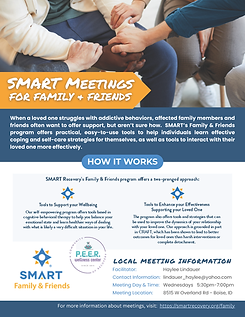
Our skills training for Family & Friends includes tools for positive communication skills and other strategies to help you change the dynamics of your relationship with your loved one. This method has been proven to be more successful than harsh interventions or complete detachment.
Our mutual desire is that your loved one will take on the choice to pursue their own recovery and that you will learn ways of improving your life at the same time.


