_edited.png)
"The Recovery Movement"

We Stand On The Shoulders of Giants
While the modern recovery movement can be traced back to that fateful day in 1935 when Bill Wilson met Dr. Bob Smith in Akron, Ohio and the two went on to create Alcoholics Anonymous, it’s only within recent years that a dynamic, visible and vocal grassroots recovery advocacy movement has sprung up throughout the nation.
The founding of Alcoholics Anonymous marks the beginning of what has come to be called the Modern Recovery Movement; a movement that has made (and continues to make) recovery from mental health and substance use disorder both attainable and sustainable for millions of individuals and their loved ones.
At its core, the movement champions the idea that individuals with mental health conditions and substance use disorders can heal, actively participate in their own care, and lead meaningful lives in their communities.
In 1976, "Operation Understanding" shattered the silence and shocked the world around alcoholism and addiction. For the first time, 50 courageous Americans—public figures, athletes, actors, and accomplished professionals—stood together and shared their stories of recovery. They communicated to the world that addiction does not discriminate, but more importantly, recovery is possible for everyone. Organized by Marty Mann, attendees of this event included world-famous actors Dick Van Dyke and Dana Andrews, astronaut Buzz Aldrin, the beloved television host of “To Tell The Truth,” Gary Moore, Academy Award-winning actress Mercedes McCambridge and the Emmy-nominated Jan Clayton, baseball stars Don Newcombe and Ryne Duren, and singer Guy Mitchell.

Finding Our Voices
WHAT WASN'T WORKING
"Through the "war on drugs," the just-say-no campaign, and into
the early years of this century, the overarching approach to
substance use disorders (SUDs) called for a single outcome (abstinence) and a single methodology (spiritual connection with a higher power) as the remedy for SUDs. Those who did not become permanently abstinent or rejected the spiritual approach were seen as "not ready" or "in denial." A seismic shift in thinking about "addiction" and "recovery" began in earnest in the 1990s."
"CHANGING THE SCRIPT"
In response, the 1990s saw new grassroots entities called recovery community organizations (RCOs) spring up around the country to enable people in recovery, and their families and allies, to come together to engage in recovery advocacy and to support each other in their recovery journeys. A national recovery summit convened in St. Paul, Minnesota, in 2001 brought together representatives of these organizations and national recovery advocacy organizations, who forged what became a national movement to elevate recovery as a focus of treatment, research, public awareness, and institution building. The summit also saw the launch of a new organization, Faces & Voices of Recovery, to represent the RCOs and people in recovery generally [2].
SAMHSA provided significant support to the developing movement by helping fund RCOs and the 2001 summit. In 2005, SAMHSA convened the National Summit on Recovery to reach consensus on the Definition of "Recovery", The Guiding Principles of Recovery, the 4 Domains of Recovery and elements of recovery-oriented systems of care (ROSCs). The summit had as its overarching goal promoting better integration of recovery into policy, services, and systems of care for people in or seeking recovery.[3]
New institutions—such as Recovery Community Centers (RCCs), recovery cafés, and collegiate recovery programs, described elsewhere in TIP 65, especially Chapter 4—have come out of the recovery movement, as has a new type of service for people in or seeking recovery: Peer Support Services (PSS). The movement has become even more inclusive of families and different cultural approaches, and it focuses on developing systems of care and communities that support recovery.


References:
[1] Counseling Approaches To Promote Recovery From Problematic Substance Use and Related Issues [Internet]. Treatment Improvement Protocol (TIP) Series, No. 65.
Rockville (MD): Substance Abuse and Mental Health Services Administration (US); 2023.
[2] The Modern Recovery Movement: A Brief History (CBI Bookshelf. A service of the National Library of Medicine, National Institutes of Health.) https://www.ncbi.nlm.nih.gov/books/NBK601486/box/ch1.b6/?report=objectonly#
[3] Gumbley SJ. Recovery in the 21st Century: From Shame to Strength. J Addict Nurs. 2016 Apr-Jun;27(2):143-7. doi: 10.1097/JAN.0000000000000125. PMID: 27272998.
Using Our Voices
In March of 2014, Director Greg D. Williams changes the addiction conversation from problems to solutions in his documentary, "The Anonymous People".
Joined by a cast that included Tom Coderre, Tara Conner, Laurie Dhue, Don Fertman, Frank Greenagel, Chris Herren, Kristen Johnson, Patrick Kennedy, William Cope Moyers, Jim Ramstad, John Shinholser and Bill White this important documentary of the Recovery Advocacy Movement sheds light on recovery, breaking stigma through powerful stories of hope, activism, and long-term sobriety.
In October 2015, the National Council on Alcoholism and Drug Dependence (NCADD) participated in the historic "UNITE to Face Addiction" rally on the National Mall in Washington, D.C. on October 4, launched a new official website layout, and observed National Substance Abuse Prevention Month.
Tens of thousands of Americans gathered on the National Mall, uniting advocates, celebrities, and public officials alongside groups like NCADD to break the silence surrounding addiction.
Once again, celebrities stood up to humanize substance use disorder, fight stigma and bring awareness to the prevention of drug overdose and the reality of recovery.
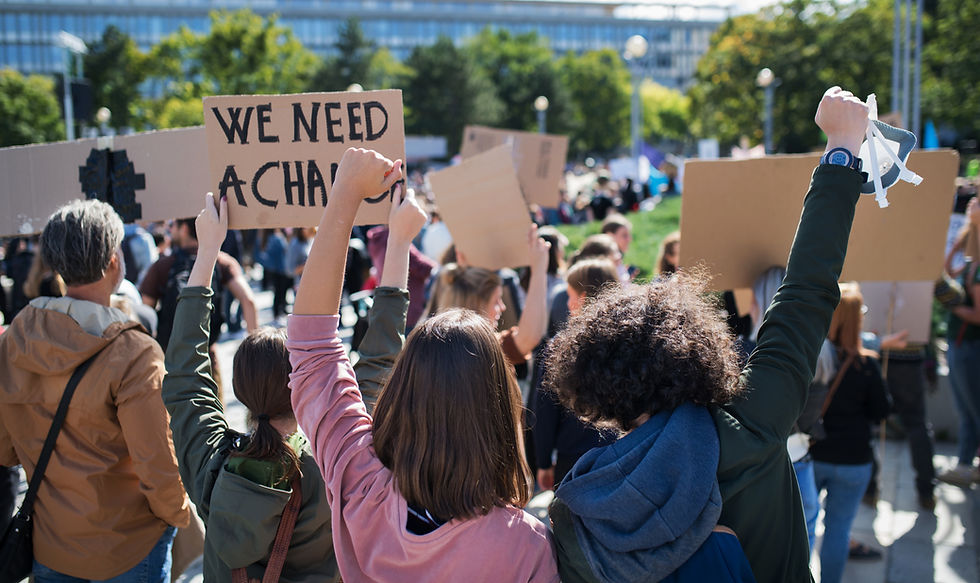

The NEW Recovery Advocacy Movement
(NRAM)
Definition
The New Recovery Advocacy Movement (NRAM) is a social movement led by people in addiction recovery and their allies aimed at altering public and professional attitudes toward addiction recovery, promulgating recovery-focused policies and programs, and supporting efforts to break intergenerational cycles of addiction and related problems.
Movement Goals
The founding goals of the new recovery advocacy movement are to:
1) portray alcoholism and addictions as problems for which there are viable and varied recovery solutions,
2) provide “living proof” of the diversity of those recovery solutions,
3) counter any actions that dehumanize, objectify, and demonize those with or recovering from AOD problems,
4) enhance the variety, availability, and quality of local/regional treatment and recovery support services, and
5) remove environmental barriers to recovery by promoting laws and social policies that reduce Accidental
Overdose Deaths (AOD) problems and support long-term individual and family recovery.
The core and evolving messages of the
New Recovery Advocacy Movement include the following:
Addiction recovery is a living reality for individuals, families, and communities.
There are many (religious, spiritual, secular) pathways to recovery, and ALL are cause for celebration.
Recovery flourishes in supportive communities.
Recovery is a voluntary process.
Recovering and recovered people are part of the solution: recovery gives back what addiction has taken from individuals, families, and communities.
Recovery is contagious and can be spread in local communities by increasing the density of recovery carriers and expanding recovery landscapes (physical, psychological, social, and cultural spaces) supportive of addiction recovery.
Your voice matters!
Learn more about Recovery In Action


In 1976, leaders in recovery stepped forward publicly to challenge stigma, spark national conversation, and prove that recovery is real. Their courage helped transform addiction from a source of silence and shame into a public health issue that demanded compassion, support, and action.
Now, 50 years later, we’re honoring that legacy — and building what comes next.

Built by People. Powered by Stories. Fueled by Action.
